






 Kate Owens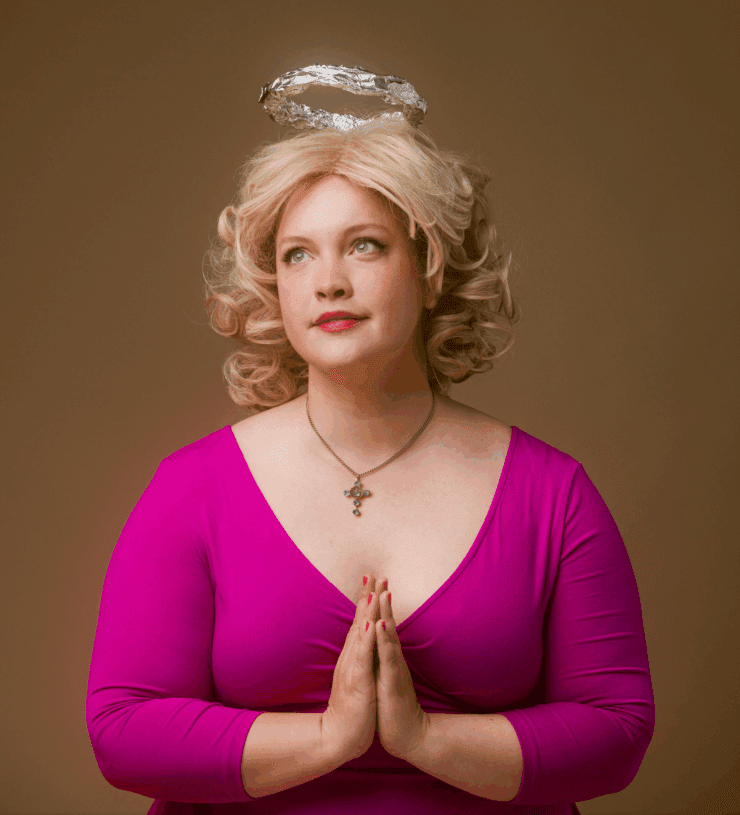
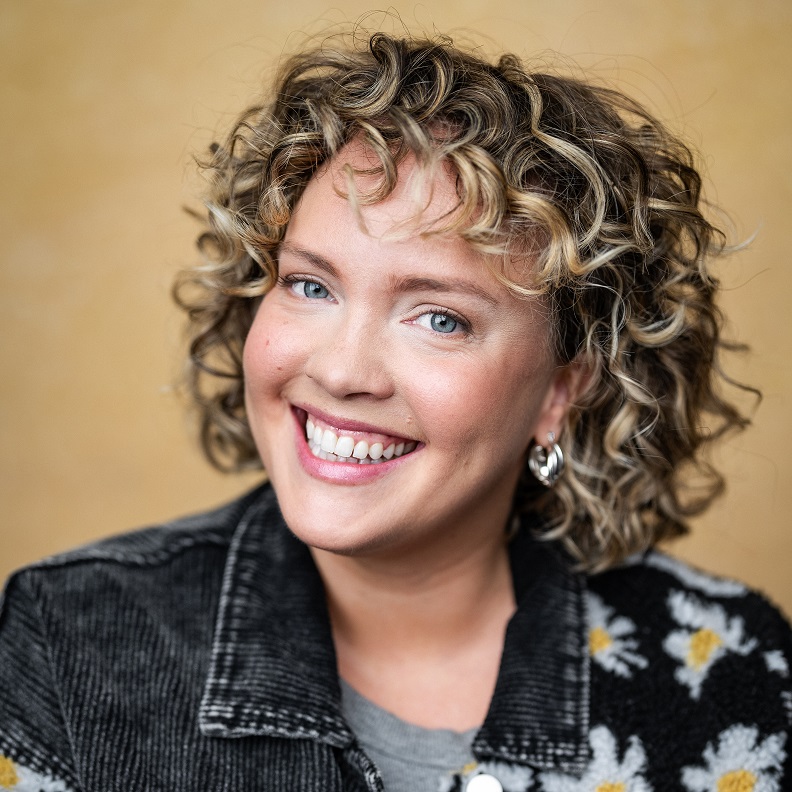
Kate Owens is the performer of Kate Owens: Cooking with Kathryn , to be performed at Edinburgh Festival Fringe from July 31st – August 24th (not the 11th) at Big Belly at Underbelly, Cowgate from 17:10 (60mins).
Tickets are available through the EdFringe Online Box Office.
I discovered clowning at one of the darker points in my life. I had just returned to New York City after a year-long apprenticeship at a Shakespeare company — where I realized, somewhere between the obsession with iambic pentameter and listening to men debate about the difference between “aye” and “ay,” that I didn’t actually want to do Shakespeare ever again.
I was broke. I was subletting a room in an apartment I’d found on Craigslist and living with three strangers (not counting the cockroaches). I had $15 in my bank account, which was about to be spent on another pack of cigarettes. I felt lost, scared, and truly hopeless for the first time.
Making people laugh has always come naturally to me. But the typical New York comedy paths, like doing stand-up at open mics or taking improv classes, never fully clicked. It made me feel like I didn’t belong in the scene, like the thing I was good at had no home. Then one morning, a friend texted me: “Hey! I’m taking a clown workshop next week with a Spanish clown named Aitor. I feel like you’d love it!” I didn’t know what she was talking about —and I was pretty sure I wouldn’t fare well in the circus. But she assured me it wasn’t that kind of clown. It was a performance technique, she said, one that helps you connect to your joy, your body, your inner child. I texted back, “sure, why the hell not lol.”
On the first day of the workshop, I stepped into a rehearsal studio in Chelsea with about 20 other students. Aitor was already there, sitting in the corner in a funny red vest. I immediately felt out of place. I was raw, fragile, and absolutely not in the mood to meet my inner child. I was afraid people would see right through me — see that I was struggling with my mental health, doubting my career, and honestly, hating myself. I didn’t want anyone to witness that. At the top of the workshop, Aitor said: “The one thing we all have in common is that we’re idiots. Out in the real world, we have to pretend to be smart. If we show too much stupidity, we won’t survive. But in here, we want to see your inner idiot. This is a safe space to be stupid.”
A wave of fear and relief washed over me. Clown doesn’t ask you to be clever. It asks you to be honest. And over those two weeks, I slowly began to open up. I cried, flopped, played, and made people laugh – not by being witty, but by being vulnerable. And by the end of the workshop, I felt lighter than I had in years.
Since then, I’ve seen clowning transform people — and I’ve felt the transformation in myself. There’s a kind of magic in the way clowning allows us to take our pain and show it to others, not with pity, but with play. It lets us alchemize our grief into something shared, and sometimes even something funny.
One of my other clown teachers, Philippe Gaulier, says “The clown is a moving target.” I come back to that idea often. There’s no fixed point to aim for – no perfection, no finish line. Just a continual act of showing up, staying present, trying again, and failing better.
When we start to see our growth, our career, and even our grief as moving targets, we free ourselves from the pressure to “get it right.” There’s no bullseye we’re meant to hit, just the courage to keep aiming.

 Madeleine Martin
 Jess Turner
 Lamesha Ruddock