 Shay Mace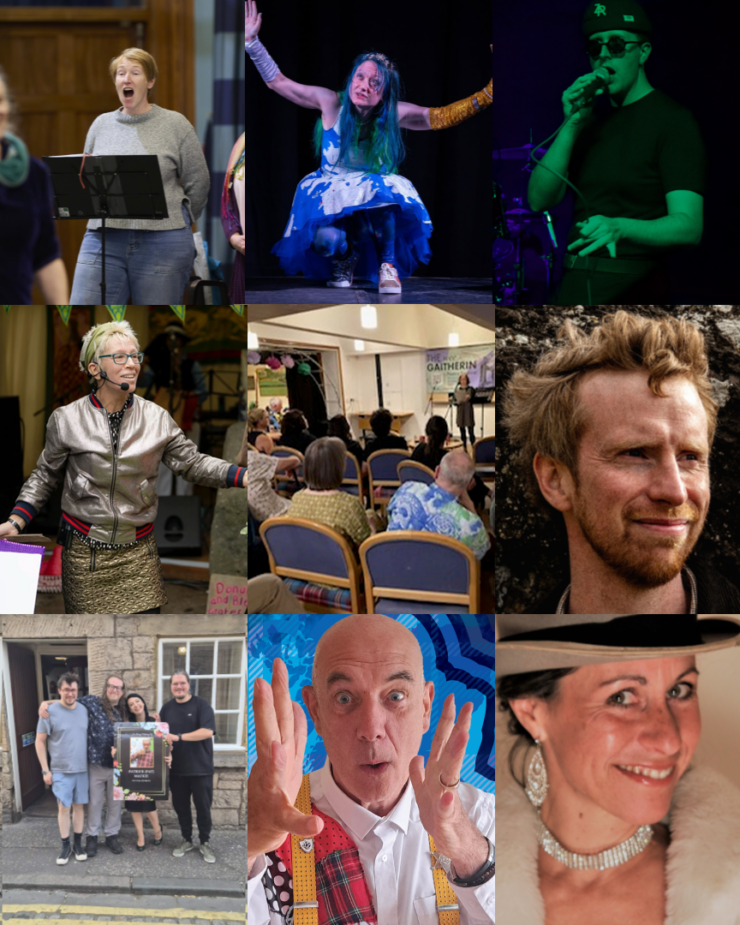
There’s no grander sense of how to start the first ever Fringe Festival in the Scottish Highlands than with an almighty, hearty Ceilidh in Inverness Town House, originally the meeting place of Inverness Town Council dating back to 1708. Inverness only became a city at the turn of the millennium, and now, over a quarter of a century later, it sees the birth of its first Fringe festival. There are much parallels between the Festival and the aforementioned venue for its opening ceremonies – ambition, debate, and grandeur being three terms that have come to define both. As the climate changes, both culturally and environmentally, Inverness Fringe has firmly set the stage for a bright future in this opening gambit.
Over the four days I spent in Inverness, almost each afternoon was full of resplendent sunshine. Had you told folk twenty years ago that Inverness would be hosting a Fringe Festival in the first week of October, you’d likely have been met with at least a light smirk. It was a pertinent reminder that this is city now thrust into the spotlight, and the sunlight, through much of the year. It, too, is one of Europe’s fastest growing cities, with an acclaimed live folk music scene already nascent, and the creative industries fast finding a sensible new home in the continent’s far North.
Local five-piece Ceilidh band Reelrig opened proceedings with a spirited, joyful night of reels and jigs for all ages, complete with a fascinating accompanying performance from Just Sing Choir, offering up gospel, folk, pop and world harmony and firmly rooting this festival in the city’s established musical traditions. There would be nightly offering of live music across Church Street, the nightlife hub of the Highland capital, including at the world-famous Market Bar Upstairs that once saw the fledgling careers of Paolo Nutini, Billy Connolly, Amy Macdonald and The Proclaimers to name but a few.
Spoken Word, a medium that clearly also has a great local following, was well-represented in the programme of the first couple of days. Caroline Burrows put together a heartfelt, engrossing two-part poetry play in Venus and the Moon: Parts 1 & 2, exploring intimacy, romance, and self-worth against a celestial backdrop that skilfully blended myth and candour. Performing at ‘Upstairs’, part of the complex of bars surrounding a courtyard that makes up the pub known as The Gellions, she is surrounded by a dot matrix style LED backdrop, that was used to create interstellar visuals that were just as gripping as her poetry.
A compilation night, held later in the week and hosted by International Beat Poet Laureate Fin Hall, brought together three poets at all stages of their careers. Audiences were particularly captured by the stellar performance of ‘The Canny Linguist’, who mixed biting satire with an introspective exploration of bullying and self-revelation, in a showing that was utterly bare-all.
Theatre, New Writing, Play Readings and Devised Performances had been grouped into the programme under the ‘Performing Arts’ label, an area which could see some greater attention in the festival’s coming editions, particularly in clarifying precisely what sort of performance type was on offer and at what stage of development the piece was in. In the freshly-painted XOKO Upstairs venue (literally the loft space of a bakery, with sacks of flour still lining the walls), we witnessed the first reading of Ian McDonough’s playscript Three Kings Came A-Riding, set post-apocalypse on a remote Scottish island, with captivating performances and an intriguing story that deserves a fuller purpose, and surely, a full staging from stalwart supporting local theatre company Dogstar Theatre.
Comedy featured throughout the programme too, although the timings of events occasionally made it harder to fit multiple shows into one evening. The festival, in its first year, has taken on an ambitious and quite extravagant number of venues, and with time in the years to come, will find a sharp focus on what has worked and not. As someone who personally quite likes a full schedule for the evening, I found myself taking a naturally slower pace, which maybe comes to equal the relaxed surrounds in many ways. The breadth on show in this first offering, nonetheless, was fascinating to see unfold, and seeing locals and tourists alike flock through the door filled my heart and soul.
I was lucky enough to call Inverness and its surrounds my home for a number of years, and for me it was always a city ‘on the up’. Projects like Inverness Fringe, in their commitment to community-led work, filling local spaces with local talent, and offering spaces for people to connect, create and enjoy, bring this city ever closer to realising its potential, which is bursting at the seams, and begging for a place to be seen, heard, and valued.
Inverness Fringe Festival continues this weekend, until Sunday 4th October. Find out more about the full programme and book tickets on their website.
 Ellen Leslie
 Tom Clayton