


 Shay Mace
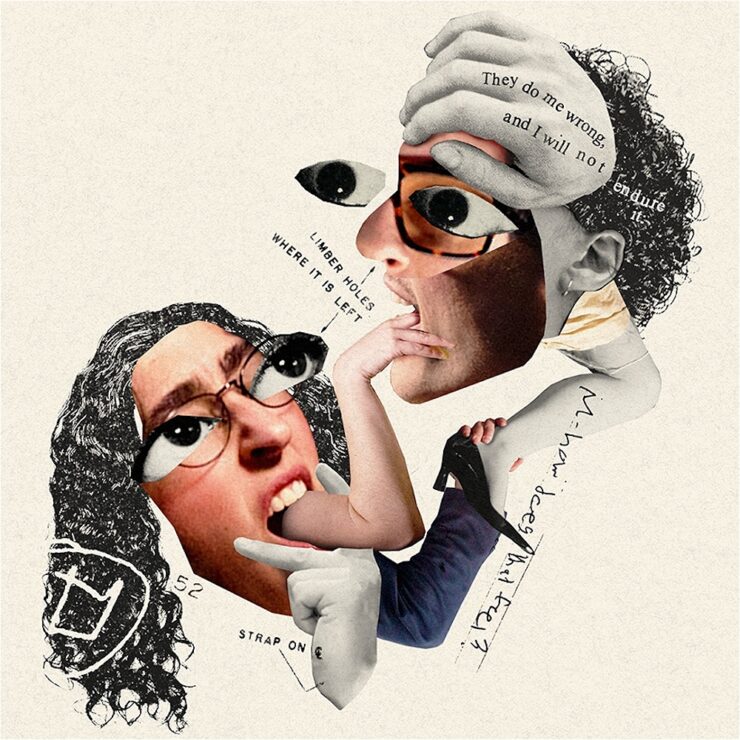
There are plenty of bizarre propositions in Berlin-based ensemble Purpose Machine’s new piece, debuting at Voila! Theatre Festival this week. Firstly, the title, which the well-read may know is a quote from Ursula K. Guin’s sci-fi feminist epic The Left Hand of Darkness, letting us know to expect some form of exploratory gender and sex business is afoot. The second is the more interesting, and lesser marketed element of practice behind the show, which further elucidates a characterful dramaturgy and theatrical language that is apparent when you walk into the space. This is costume-driven work, with an abundance of clutter giving rise to a deftly performed interrogation of gender, reproduction, creativity, and the intersections between.
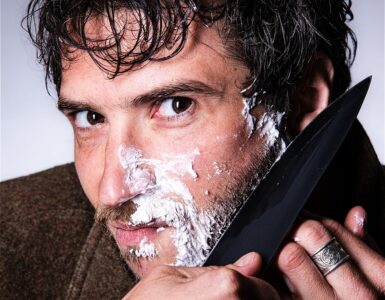
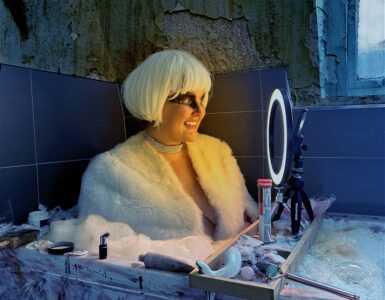
Behind the piece, Canadian costume designer Mara Zigler and actor Dylan Aiello weave an unorthodox tapestry of a couple on the brink of creative and reproductive emission – both offered the chance to audition for the role of the Bard’s Richard III for the same production, and neither quite able to come to terms with a reality in which they don’t get the role. Through a writhing pile of costumes, fabrics, velcro and curiosities that come together at the centre of their ethos – to create a dress-up party, within which texture and impulse transform the body and open unexpected theatrical worlds. Characters, genders, and expectations are drawn from the material world and how garments inform consciousness. It’s a brave, aesthetic-driven paradigm that pays off in its ambition and design, though falters in its pay-off and impression.
Across an hour of speech practices, reminiscence, and between-the-sheets encounters, this duo unravel the expectations of gender both on and off the stages of performance and life with ephemeral verve. Purpose Machine ask what we can expect of our partners, our performers, and our loved ones, especially once the opportunity of a lifetime (or, sometimes, the opportunity to create another) appears ahead of us. As ‘Minky’ and ‘Dickie’, they both find parallels in the character of Richard III, someone desperate to fulfil the destiny promised to him at birth. But when birth and rebirth of the self, come knocking at the same time, suddenly the societal constraints of gender, career, politics, collide with calamitous consequences – a night-long fever dream only to be ended when the couple’s agent rings.
It’s a fervent, kaleidoscopic hour that rings through back stories of suffering, romance, intimacy and introspection – sometimes at such a pace that the plot doesn’t quite know how to dial in an impression of those concepts that leaves the audience with something to think about. A subplot about Minky having to wear a back brace as a child seems to lack a foothold in the broader marital bed concept of the show, as do broader gendered ideas that root themselves in Le Guin’s precept – “I eliminated gender, to find out what was left. Whatever was left would be, presumably, simply human.” While the physical comedy inherent in the piece plays on gender, it leaves little to ponder or point out, and in its aesthetically-driven nature, finds more fruit in levity than clarity.
Zigler and Aiello are both talented clowns and actors, able to drift in between both forms without ever alienating the other, even if the substance of the piece falters out. The Shakespeare is tantalisingly semi-present – not foreboding, yet not impactful enough on what unfolds that it might give lip service to those seeking a reimagining of the Bard’s work. Instead, there’s a broader parable at play here about how we delegate humanity, ambition, reproduction and creativity to ourselves, especially when we are interdependent on one another for at least some parts of those labours. Its philosophical implications are a little too thin to deliver adamantly, even if the show offers an otherwise enticing and inventive hour of physical comedy and drama in tender balance.
Come like Richard III himself, and drink a bottle of wine per day as you enter the faltering days of your reign.

The King is Pregnant
About the show
Minky and Dickie lose themselves in the act of creation. Minky and Dickie have both auditioned for Richard III. Minky gets the role. Dickie tells her she didn’t. What begins as a small domestic betrayal…
 Maia Kahn