







 Salvador Kent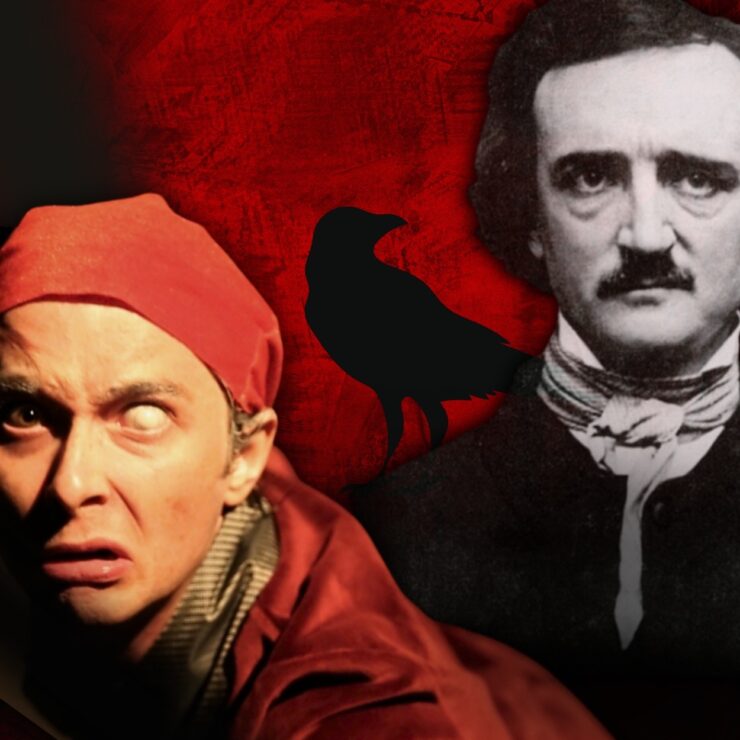
Stephen Smith proves to be an adept one man band in his self-penned, directed and performed Edgar Allan Poe double bill The Black Cat & The Raven. This is a clever adaptation of two of Poe’s stories that not only understands the essential Gothic to Poe’s work but also the expressiveness of his language. The effect is a rich evening of fierce oration and some beautiful theatricality.
The first and more narrative of the two works, The Black Cat is a compelling bit of storytelling. Smith lunges around the stage as an alcoholic who is haunted by cats, and ends up committing multiple grisly murders of felines and humans. The play is visceral and intriguing, and Smith is very good at tracing the forces at play in the Poe work. Dichotimies of God and Man, the Dominion or Nurturing of Animals. The conflict between Morality and Instinct, the ambigious line between the supernatural and the psychological – these tricky threads in Poe’s narratives are vitalised brilliantly by Smith’s adaptation. Moody lighting design is textured and shadowy, rising into crescendoes of Argento reds.
The whole texture of the play has a degree of ‘Camp’ in the Sontagian sense – the worlds Smith constructs, from painted eye-bags, to Victorian attires, to even the language and grammar of Poe puts itself in quotation marks. We see “eye-bags”, “murders” and “reds”. We imagine “cats” and “wife” and “axes”. Joseph Furey’s music is orchestral and “atmospheric”, it conjures a subjective shadow-y world. Smith literally calls attention to the transition between stories, dressing himself onstage. He applies white to his hair, and puts in a stylised contact lens in front of our eyes. It’s a metonym for the texture of his performance. Smith is as physical, his eyes are as bulging as a figure in a German Expressionist film. His voice has the fierceness of a storyteller and the texture of a classical actor. His acting is nothing less than an intensely impressive craft. And he uses it with expressionistic, joyful hyperbole.
This is all to say through translating Poe into overt theatricality, Smith takes Poe’s literate language – that is a language that calls attention to itself – and adds to it a series of gestures that even heighten the heightened language. This is not a subtle hour, and that’s what makes it great – it brings the philosophies at the heart to Poe to a thrilling, live, life.
The storytelling DNA of The Black Cat makes it seem almost rote compared to the next story, The Raven, which transforms Poe’s most famous poem into a verbatim piece of theatre. The poem is characterised and recited with a crippled fury as Smith embodies an Old Man howling at the darkness outside his door. It is a simple formal choice Smith makes. He puts a psychology to the words, adds appropiate gesutres. But the effect makes the language seem anew. It’s an exciting prospect. How might Tennyson’s St. Simeon Stylites, or Rossetti’s Goblin Market fare in this form? Smith proves himself a brilliant theatrical interpreter of heightened language. His work is expert, and most crucially, lets the audience into Poe’s world. It becomes a thing of unexpected, tidal beauty in The Raven, a total trance only broken by the slightly gawkish croaks of ‘Nevermore’ from the titular bird.
This is a handsome double bill. There is a piece of beautiful storytelling in The Black Cat and a compelling theatrical take on a legendary poem in The Raven. The discovery here though is not Poe, but Smith’s formalist instinct. Do catch his One Man Poe, any of his repertory of six are undoubtedly exciting. I eagerly await the next project too, and hope it’s in the same vein – classical literature, thoughtfully ‘made new’.
Recommended Drink: Swill a good Scotch with this one, it’ll warm up your throat and give you a little bite too.
Performances of One Man Poe: The Black Cat and The Raven have concluded at Dundee Fringe 2026, but Stephen Smith will tour various venues throughout the rest of the year. Find out more info on the Threedumb Theatre Website.
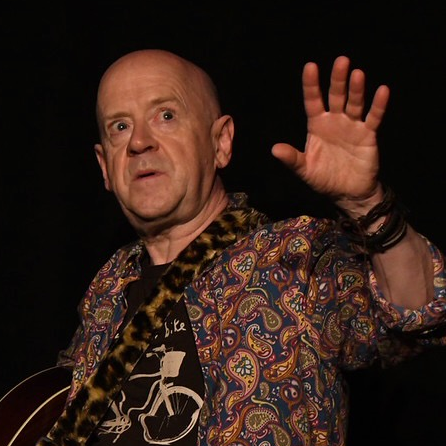 Chris Brannick
 Too Much Caffeine
 Shay Mace