





 Shay Mace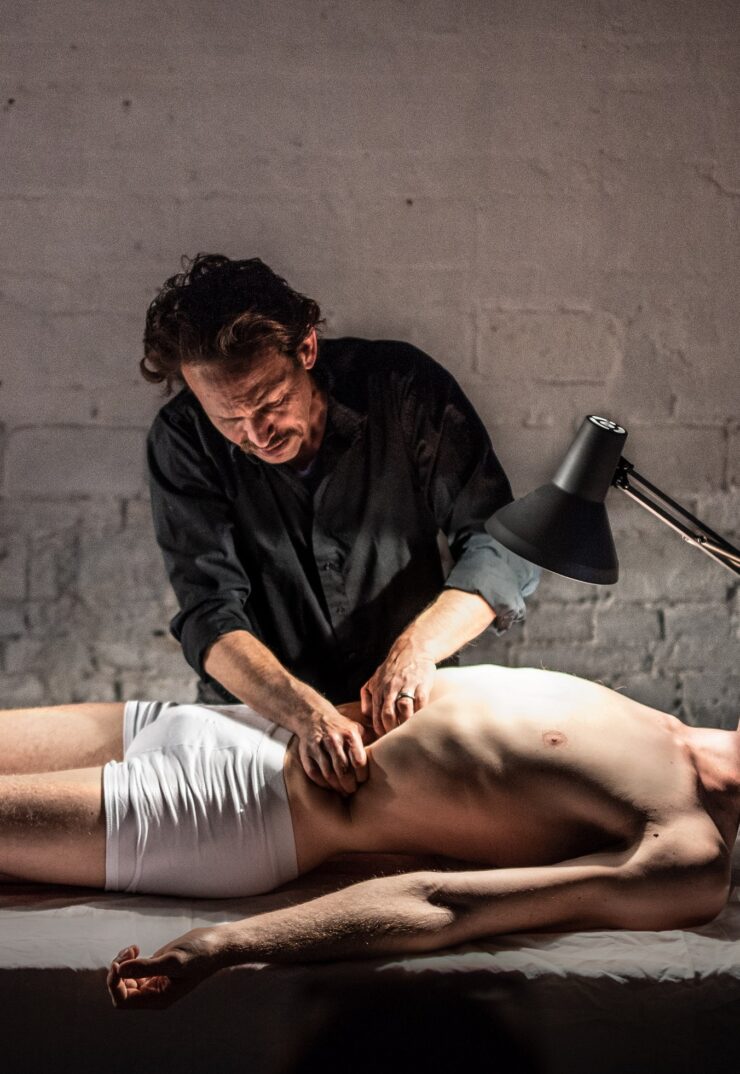
Content Warnings: Discussion of Genocide
Boaz Barkan arrives at the Edinburgh Festival Fringe later next month with his experimental theatre piece Our Other Organ, a performance lecture that sees him dig into a living body to uncover a new organ – the place where our racism resides. The piece aims to dissect antisemitism and its impact on Jewish identity, exploring structures of violence and domination. We caught up with Boaz for a pixelated pint to pick apart the show, and find out what audiences can expect.
You can catch Our Other Organ at Summerhall (Anatomy Lecture Theatre) from 16:15 (60mins) on August 18 -31. Tickets are Available Through the EdFringe Online Box Office.
Shay: Hi Boaz, tell us about antisemitism, Zionism and embodied racism, and why you have decided to bring this to the stage now?
Boaz: Our Other Organ is a performance lecture in which I theatrically dissect a living body in search of a fictional human organ—the place where racism lives inside us, and from where it grows into our actions, beliefs and political systems. The performance explores antisemitism and its impact on Jewish and Israeli identity, moving through my own family history and my complicated relationship with Zionism. As an Israeli living abroad, who resents the Israeli apartheid regime and with family roots in the Holocaust, I feel a deep need to expand the conversation around antisemitism and, especially, Zionism. These subjects have become even more urgent, painful and difficult in recent years. At the heart of the work is a deeply personal question: how can the experience of being a victim exist inside the same body as the capacity to dominate or oppress others?
Shay: How has the creative process been of putting the show together? Give us an idea of the journey you’ve been on with it so far.
Boaz: The performance was created by me through NoLands, the interdisciplinary performance company of which I am artistic director. It is performed with Joel Degerfeldt, whose living body becomes the anatomical landscape of the work, while I take on the roles of lecturer, surgeon and perhaps a slightly morbid guide. The project began through a collaboration with Medical Museion in Copenhagen, where it was first performed in the museum’s historic anatomical theatre. That space had a profound influence on the work.
I became fascinated by the authority of the medical lecture: one person stands beside a body, points to it and explains what is normal, abnormal and meaningful. I began to see anatomical lectures as performances not only of science, but also of culture, power and ideology. The process combined research into anatomy, antisemitism, Zionism, racism and my family history with writing, physical improvisation and the gradual invention of this fictional organ. The challenge was to keep the political questions alive in the body and in the theatre, rather than creating a conventional lecture or political statement. The strong and strong positive response the piece has received has encouraged me to trust that this format speaks to people and opens a new space for reflection.
Shay: What will be the first thing the audience sees, feels, and hears as they enter the space?
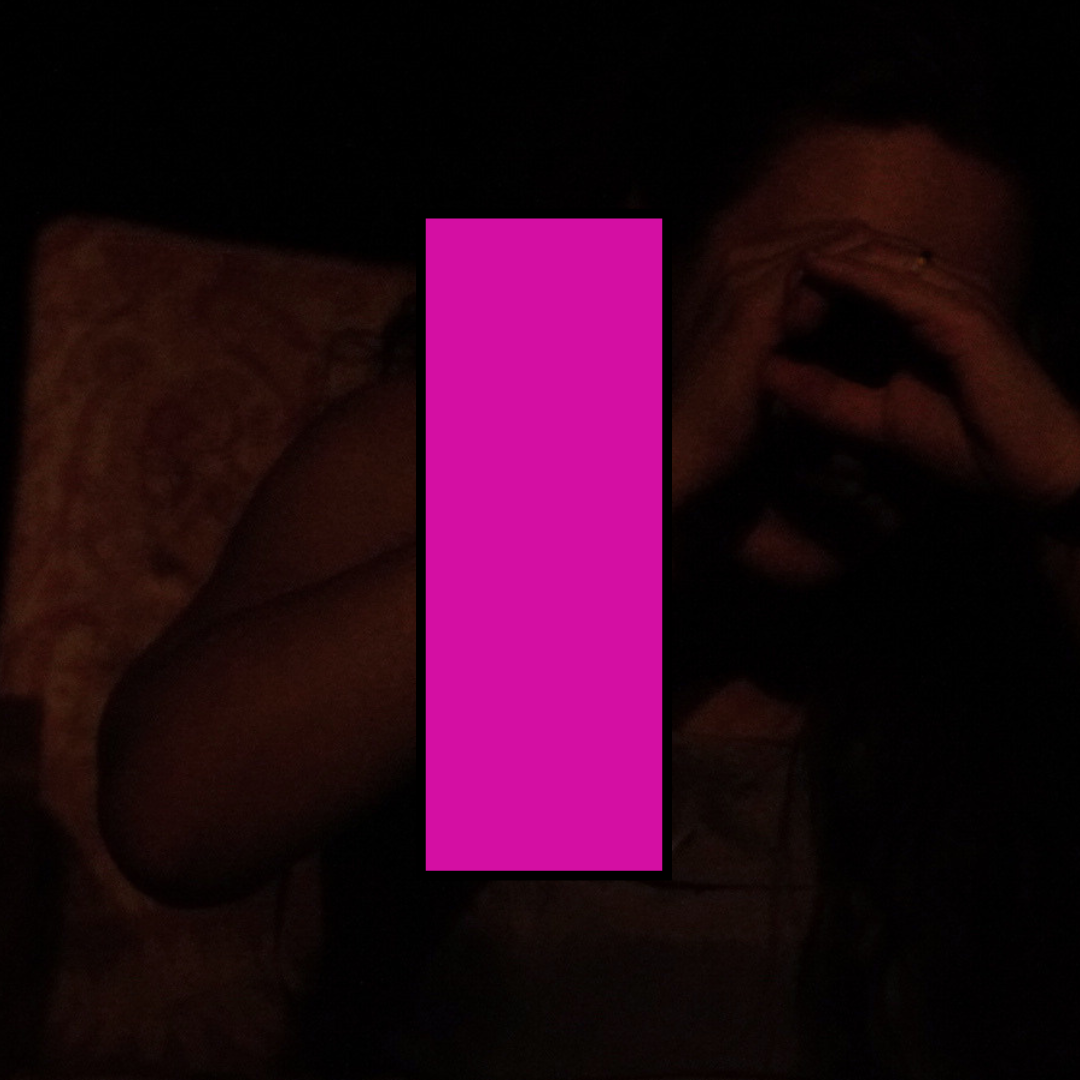
Boaz: At first, the audience sees a very simple and unassuming setup: a plain white covered table and two lamps. But very quickly, that image changes as a living corpse is placed on the table, prepared for a live dissection. The audience may initially feel that they understand the situation: there is a body, an expert and a procedure about to take place. But this certainty gradually begins to shift as I manipulate the body more invasively, ending up climbing onto it in an almost erotic way, while describing scenes of violence and military machinery. The body becomes personal, historical and political, and the authority of the lecturer becomes increasingly questionable. There is dark humour and some fake blood, but the real dissection is of the stories we inherit and the systems of violence we may find ourselves reproducing.
Shay: What are you hoping the audience might take away from the experience, if anything?
Boaz: I hope the audience leaves with more questions than answers—but with questions that feel personal, political and physically alive. I hope the performance offers a new perspective on Zionism and Jewish history by placing them within the history and present reality of Palestine. It asks how a people carrying a real history of persecution can also become part of a system of domination, displacement with genocidal tendencies.
Recognising this does not erase Jewish suffering or the history of antisemitism. It asks what we do with that suffering, how it shapes our identities, and what kinds of political structures we build around it. I also hope the audience begins to think about racism not only as an opinion or ideology, but as something embodied—a mixture of fears, reflexes, inherited stories and assumptions about whose life matters. Questions such as: How has racism affected my inner life? Where do I feel inferior or superior? And how do these forces shape the way I move through the world and relate to others?
Shay: What journey has the show been on to find itself at EdFringe 2026?
Boaz: The performance began at Medical Museion in Copenhagen and has since been shown in museums, galleries, theatres and festivals across Denmark, including Toaster, CPH Stage, Husets Teater, ARKEN and Live Art Denmark, as well as at The Sick of the Fringe in London in an earlier version. My relationship with Summerhall, and particularly with Tom Forster, is also an important part of this journey. Tom previously invited an earlier work of mine, May I Speak About Dance?, and it means a great deal to return with a new piece and to be able to share how my work has developed over time.
Bringing Our Other Organ to Edinburgh places it within a much larger international context, where it will meet audiences with very different political experiences and personal histories. Coming as part of #DANISH has been extremely important, as it has provided a thoughtful framework and the preparation needed to present such sensitive material responsibly. Summerhall feels like a deeply supportive place for the work, and that has been confirmed by the care, engagement and preparation surrounding the production.
Shay: With EdFringe now just around the corner, what are you most excited for?
Boaz: I am most excited—and slightly terrified—to discover what happens when the performance meets an international Fringe audience. I do not expect everyone to agree with the work, and that is not really the point. I am interested in whether the theatre can become a place where difficult and contradictory material is allowed to remain difficult and contradictory. I especially hope the work reaches people who are open to a story that holds together the contradictory experiences of victimhood and oppression within Jewish and Israeli history.
I also hope it reaches some of the people who might look at the title or description and immediately decide that the performance is either for them or against them. Those are exactly the people I would most like to invite. The performance is not asking anyone to give up their history. It is asking what else we might notice when we look at how that history continues to live in the body.
Shay: Given the themes of Binge Fringe, if your show was a beverage of any kind, what would it be and why?
Boaz: It would probably be a dark, medicinal herbal drink served in a laboratory glass—something that initially looks cleansing and rational, but has a bitter aftertaste and leaves you unsure whether it is a cure or part of the illness. Perhaps it would contain pomegranate, salt water, strong black coffee and one drop of fake blood. It would be presented as a remedy for inherited trauma, but the label would warn that it may also produce nationalism, superiority, selective memory and an uncomfortable urge to examine your own body. Ideally, it would leave you more awake than refreshed.
A reminder, you can catch Our Other Organ at Summerhall (Anatomy Lecture Theatre) from 16:15 (60mins) on August 18 – 31. Tickets are Available Through the EdFringe Online Box Office.
Image Credit: Jakob Tekiela
 LiMBO PiNS
 Ellen Leslie