





 Esme Davis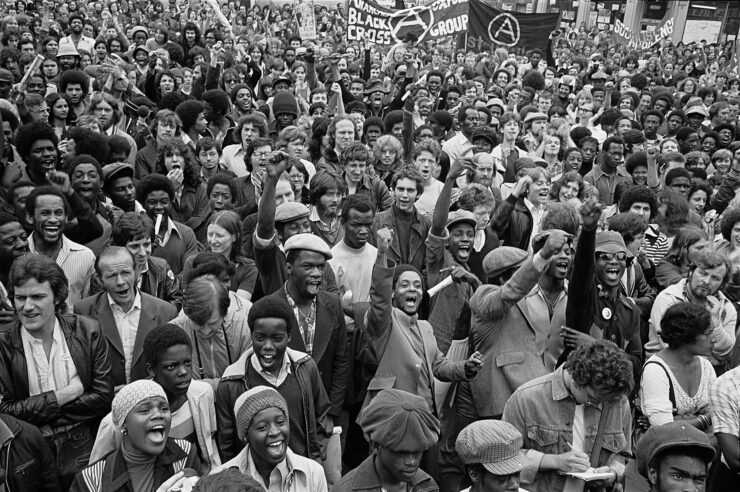
A century of resistance, put back in the spotlight. From women’s suffrage, across class struggle, to peace protest, and pride. Looking back on history’s activists will always be a moving experience. Whether it’s images of vast protesting masses, or unforgettable actions from individuals, reflecting on resistance can be shocking, conflicting, and inspiring. But rarely do we stop and consider the people who make this reflection possible: the photographers who capture these snapshots of rebellion. Moments that would otherwise be left only in the memories of only those who witnessed them.
Artist and filmmaker Steve McQueen branches away from film but maintains his distinct focus on intense, important stories in his role in conceiving Resistance. This exhibition, curated by Steve McQueen and Clarrie Wallis, explores how photography and protest sit hand in hand. It celebrates how activists have captured the spectacle of their actions to spread their message. On the darker side of things, it also touches on how state surveillance has been used to censor and control their actions.
We’re sitting at a point in time where the right to protest may be at risk of losing its power. Mainstream media paints an image of social movements as problems to be solved, people to be shut up, and messages to be censored. An onslaught of anti-protest orders has been released in recent years to make the organising of any activist movement substantially more difficult. And these measures aren’t just having an effect on activists, but much wider public mindset, with an increasing majority losing any faith in the legitimacy and effectiveness of protest altogether.
In light of this, the Resistance exhibition provides a needed counter-perspective on the past achievements and future potential of protest. The core message of the exhibition is one of hope, standing firm in its stance that people will always come together to make change. As you move through room after room and take in the sheer range of movements covered, it’s difficult not to relax just a little bit. Because with the state of the world right now, I’m grateful to be reminded that people can be dependable, and kindness can be dependable, and that this has been the case throughout the last century.
When I say that this exhibition gives a voice to a range of movements, I do mean a range. It’d be difficult to find a community that is not given a moment in the spotlight throughout the seven rooms of photography. Starting with the suffragettes, the exhibition features class struggle, Jewish activists, anti-colonial movements, resistance to Irish occupation, movements for blind and disabled workers rights, peace protestors, gay pride, animal rights activists, the anti-poll tax movement, the beginning of the environmental movement, the free party movement, right down to protests against the poor working conditions for trawler workers. The photos make up a timeline, gradually building up a picture of the multitude of communities that have fought and continue to fight for their rights.
There are some that are very familiar, and provide a pleasant reminder of times where Britain hit the streets en-mass in the face of injustice. But the true gems within this exhibition are the stories that have almost been lost, hidden away in archives and only told within tight circles. These are the photographers who got right to the core of how these movements were affecting and being affected by individuals. A select few of these photos are vibrant in a way that deeply connects the viewer with the cause being captured. By bringing these to the forefront, the true impact of Resistance is given a new potency; whenever there was injustice, there were people fighting against it, even if their story has never been given the platform it deserved.
I am personally very fond of the gallery experience. There’s something uniquely peaceful about taking your time to appreciate and consider art that has been thoughtfully collected for your viewing. And that peace is definitely present in the experience of walking through Resistance, where you and other visitors will share in the learning and resulting goosebumps of Britain’s protest history.
A particular highlight was the second room of the exhibition, which was set up in a cosy little library and held a fascinating collection of anti-fascist publications against the Nazi occupation of Europe. It took my breath away to read and see the artists, poets and writers who had risked imprisonment or death to speak out against the fascist regime. It also provided a stark reminder of the danger that the label ‘activist’ held, and still holds today.
Another powerful element of the exhibition was the small collection of audio recordings attached to some of the photographs. These were snippets of conversations with experts, organisers and participants of the movements. The experience was certainly enhanced with the option to put a voice to the images, and hearing the passion, nostalgia and remaining strength in these clips breathed a liveness into the room that is often missing from galleries of this kind.
One slight disappointment for me was the subtle lack of consistency to the focus on the photographers throughout the exhibition. The first couple of rooms contained several enlightening stories about how the photos were captured and the background of the artists behind them. There were some truly awe-inspiring tales about marginalised photographers overcoming barriers and making huge leaps within the field of protest photography. However, these became few and far between in the latter section of the exhibition, with the focus shifting far more directly onto the protests themselves. Although this was still just as engaging, it did ebb away from what the exhibition promised.
Regardless, this exhibition gives a platform to a broad, diverse range of stories. Whilst it’s easy to feel overwhelmed in the current political climate, it is a valuable comfort to be reminded that protestors today are lifted on the strong, creative shoulders of those who have pushed the boundaries of resistance to new heights. By not only telling the stories of protests but the stories of the photographers who captured those moments, the viewer is granted a new depth of understanding of the risks, demands and importance of keeping the history of these movements alive today.
Powerfully curated, and needed more now than ever, Resistance should be on the list of anyone who needs a bit of hope and inspiration this Fringe.
Recommended Drink: Old Fashioned, classic and timeless, perfect for this trip back through history.
Catch Resistance between July 28th and August 25th at various times at Modern Two at Modern. Tickets are available through the EdFringe Online Box Office.
 Ben Powell
 Shay Mace
 Salvador Kent