


 Phoebe Bakker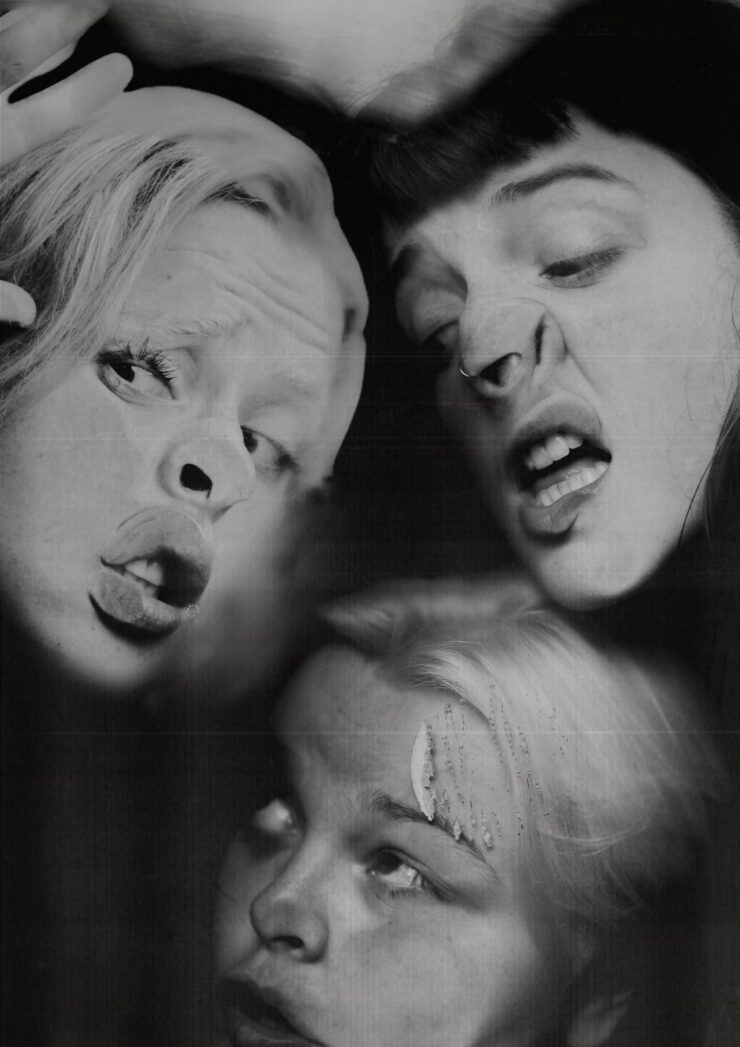
Don’t Copy Me (Copy) is a slick, simmering performance that bubbles from the moment it begins. The script constantly shifts, demanding more from its audience, meta in its analysis, and never afraid to steer into the heart of the storm.
The play opens with a retelling of a Dutch troupe’s attempt in 1988 to stage Samuel Beckett’s Waiting for Godot with an all female cast, and the ensuing legal battle. At the time, Beckett’s lawyers ultimately ruled that the themes of the play transcended the gender of the performers and so no copy right issue could be found. However, a new stipulation was added shortly after that his plays must be performed “as written” with the sex of characters played as intended. From then on, future productions faced strict conditions, leaving little room to reinterpret or play with Beckett’s work.
We then snap to the present: a theatre group brainstorming their next festival production. With deadlines looming, they consider adapting an existing play. Why not a Beckett? What follows is a table tennis match of arguments celebrating originality, others questioning whether the pursuit of something new or wanting to provide social commentary is simply self indulgent. Why should they bother with adapting something when broadly historically there are no great parts for women? Isn’t art meant to evolve, to say something new? And what’s the value in repeating a playwright whose work never offers the possibility of representation? The debate spirals, urgent and messy, but utterly alive and self aware that for the people who would be watching this adaptation and similarly watching Don’t copy me (copy) it’s like preaching to the choir.
They’re right too. None of these conversations are new. They’re conversations that are being had every single day, especially if you run in theatre circles. It would be so easy to switch off here, to brand these conversations as shallow attempts at depth. Which isn’t to say that that this conversation isn’t still enjoyable and important but more I feel like that’s kind of the whole point. The play circles a key question: is anything truly original anymore? When people say nothing is original, what I think they really mean is that the art feels formulaic, like an algorithm we’ve grown too familiar with.
The dialogue here is sharp, intelligent, and carefully honed. It stretches the audience, engaging us without but still retaining that air of fully developed people. I don’t see them as mouthpieces for the overarching points they’re trying to make, but I believe in them as friends. The humour injects much needed warmth, and I wish that had been used a few more times and pushed to the full extent that it could have been to bring in that warmth as it adds a richness that heightens their later contrasts.
Eventually, the group decides to adapt Beckett’s Play. Causing a cease and desist letter from the Beckett estate lands, reigniting the discussion: if they had been allowed, how would they have adapted it?
Suddenly, the performance erupts into something that is not quite Beckett’s Play, but a riff on its structure. The cast layers their own realities over Beckett’s words. Illuminated at separate points of the stage, they recount Beckett’s, his wife, Suzanne Dechevaux-Dumesnil, and his girlfriend Barbara Bray relationship with each other and his work. Their rhythm tight, decisive, finishing each other’s lines, tumbling over one another like sparks catching fire. It’s electric an energy that keeps building. Videos projected on screen mirror the performers, blurring repetition with originality. If you know Beckett’s work, you’re not learning anything new here, but you are learning about the way these performers relate themselves to the women in Beckett’s life as well as carving out their own identity in the face of that. Which is essentially what an adaptation is.
Don’t copy me (copy) plays with a formula, twisting and interrogating it until it becomes something alive again. A rebellious act, satirising the ‘everything original is dead’ argument.
Performances of Don’t copy me (copy) have now concluded at Dublin Fringe 2025.

 Lamesha Ruddock
 Madeleine Martin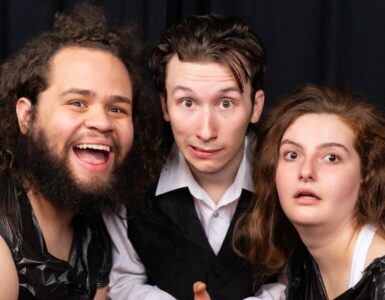
 Padraig Bond