





 Phoebe Bakker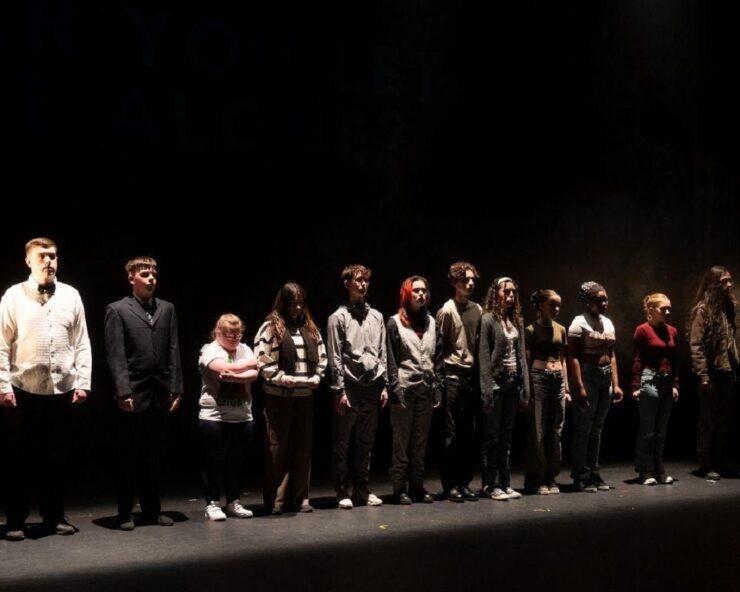
Oftentimes, when I go to review a show, I am bombarded with a cacophony of expression. Be this in the way of thoughts and ideas, staging, character work, lights, or designs. The choices are endless. It is then for me to wade through all of this and present to you, the reader. Succinctly, how this all ties together into a performance. Forbidden Fruit by Susannah Al Fraihat was a rehearsed reading at Smock Alley. This was my first time taking into consideration only the words of a play, a concept of how they may be said, and the ideas of how that may look.
TenderWrite is a young artist development programme in The Civic Theatre, Tallaght. This programme champions young artists aged 16-24. This specific series of readings of both Big and Short plays looks at life through the experience of their youngest artists as they navigate the world today. Love, desire, anxiety, fear, and a great ability to laugh despite the fact the world is heating up to a point of explosion.
Forbidden Fruit is a show that navigates the relationship between new migrant Neighbour Aziz and Joe. After Aziz brings over an ‘exotic’ fruit in his introduction, Joe slowly becomes more and more obsessed. His love for this fruit fuels his pursuit into other cultures and a bond with Aziz that seesaws between tension and tenderness.
This play shies away from nothing. We’re presented with a multitude of topics that, within the current climate, feel more pressing than ever. Al Fraihat eats them up and passes them to us with stunning care. Each conversation about culture, misunderstandings, microaggressions, and old stereotypes laid out with outstanding intelligence. At times, it almost feels painful to bear witness to Joe in these moments, but Al Fraihat serves us with a grace for all characters and with a considerable amount of empathy, especially for Joe.
Everything feels crafted with precision, from the choices for words swapping to beautiful poetry that weaves itself throughout. Ponderings on culture hand in hand with religion and comparisons to countries at war, with Ireland’s own past, as points for connection, are all done without a wasted breath in between. Stripped back on a naked stage, all we can do is listen, and we don’t miss a beat.
We’re given glimpses into what this play could look like at times. References to the ‘exotic’ fruit are never specific. Just that Joe says it is exotic, and we can project onto that. The fruit allows us into a submersion of light changes and opportunities for movement, giving the play a larger than life atmosphere. The fruit ambiguity signals to us that we aren’t meant to discern specifically where the characters Aziz, Shiraz, Lucia, and Amira are from. Clues are, of course, given throughout, but I think it’s an effective image to represent the ideas of Westerners seeing minority groups as conglomerates and later then explore Joe’s relationship on a more individual scale and witness how Joe’s understanding of culture changes over time.
Amaria’s fragmented storyline of little snippets of her life back in her home country, which is currently at war, is a consistent reminder of what is at stake and allows the core themes of this play to shine through. I think at times what we see from Amira’s story could actually simplify some of the other conversations between Joe and Aziz, as I feel we see some of what Aziz says reflected already in Amira’s story, and she alone already conveys a powerful message.
At times, I find Joe’s obsessive relationship with the fruit slightly confusing. As a catalyst for events, it works really well, but as we progress, I’m never quite sure I understand the reason behind the obsession and desire to become almost a part of this culture to the point where he does actual damage, ending up in the hospital. I found it hard to discern if it came from a place of loneliness, lack of community, or something else, and wish this had been explored a little further.
Plays like Forbidden Fruit are more important now than ever. The play’s success highlights the importance of programs such as TenderWrite, giving a space for future generations of playwrights to find their voices and develop their practice.
As I leave, I feel impassioned, hopeful, and with a renewed fire in my stomach. Sussanah Al Fraihat is a powderkeg of a writer set to make waves.
Performances of TenderWRITE Big Plays – Forbidden Fruit have now concluded at Dublin Fringe 2025.
 Jake Mace
 Tomek
Tomek