

 Ellen Leslie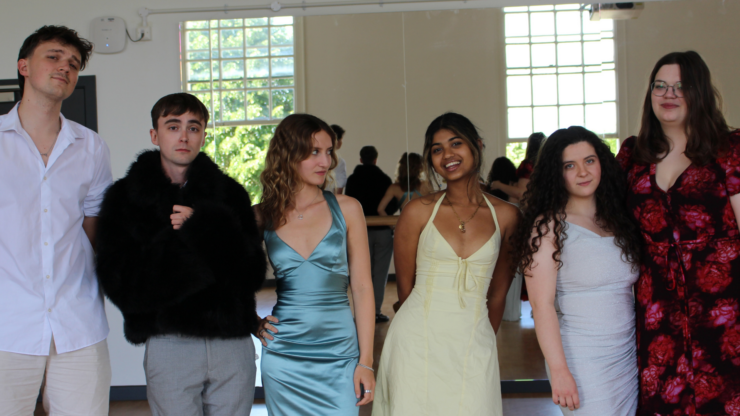
Written by Molly Squires and brought to the Edinburgh Festival Fringe by Nottingham New Theatre, Miss Thing is a light-hearted drama touching on themes of grief, competition between women and the competitive nature of beauty pageants. Set in a leaky village hall, five contestants wait in a tiny dressing room for their turn to perform on stage. Although there is no grand prize, winning the title is very important for the four locals. But the arrival of newcomer Felicity threatens to shake things up, and the contestants wonder if she will be the one to break snooty Carmen’s years-long winning streak.
Carmen and Paul are by far the most compelling characters. The actress playing Carmen fits into the role of the competitive pageant girl with ease. Her expression settles on the perfect mix of boredom and disgust, and her facial expressions during the waiting scenes are fantastic. Paul is witty, and his one-liners often have the audience in stitches. Some of them seem a bit unnecessarily mean, but the vast majority land, much to the audience’s delight.
It’s hard to warm to the other characters. Felicity is sickeningly sweet, and puts herself in the victim role. Even when Carmen walks into the dressing room of Felicity imitating her, she twists it is so that Carmen who is mean. The other characters are simplistic stereotypes: a middle aged mother who has “let herself go”, a single, bitter woman, and a creepy, misogynistic pageant host. The actors put on good performances, there isn’t really enough material for them to truly shine.
Some of the dialogue feels a bit twee. Felicity’s attempts to convince Carmen that being mean is a choice, and that she can follow her dreams are reminiscent to the messaging that you might hear in a children’s story. Julie’s terms of endearment also feel forced and unnatural.
Although the plot line is predictable, the show is saved by the heartfelt conversations between Paul and Carmen. We really root for Carmen, so it’s lovely to see her walls come down. She speaks candidly about the complicated feelings she had when her mum died, explaining to Paul that after a lifetime of pressure and expectations, her first thought was that she’s finally free, then immediately she felt like a horrible person. Paul is able to listen and advise her, while staying true to his character.
Miss Thing is by no means a bad show. It handles sensitive themes such as homophobia, grief and parental pressure delicately, and there are some genuinely wonderful moments in there. For me, the dialogue needs further refinement to make it feel more natural and less stereotypical.
Recommended Drink: A Glass of Prosecco.
Performances of Miss Thing have now concluded at EdFringe 2026.
Image Credit: Hope Somers

 Shay Mace