
 Finlay Clench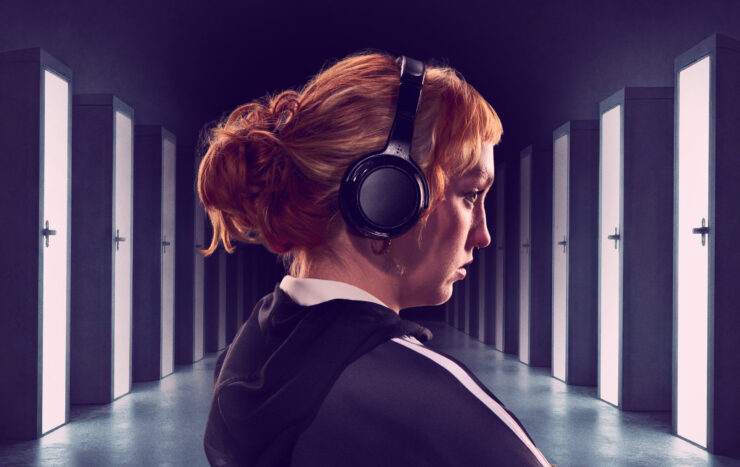
Politics is not the only spectacle, not the only performance which occurs in a parliament building. Perhap this is something we all know and have heard a million times, but this production from the National Theatre of Scotland shines a light on the voices of those placed in care and protected by the Scottish government under The Promise Act. This installation art piece tests the limitations of this law to support families and highlights those in care often sidelined by authorities. Not for the faint-hearted, this is a spectacle which will provoke revaluation, perhaps not due to its artistry but more due to its subject matter.
Crouching through passageways and doors and slowly getting lost in the stories of the one hundred people sampled in this production is invigorating. It is so invigorating that you will leave moved and quite upset by the mark that living in care leaves on families. The production does leave potential to provide a clearer call-to-arms or action, but still there is a profound sense of entrapment beyond belief which you feel by the end of the show. There is a sense of vulnerability and a clause of little escape which hangs over those living in care.
Thanks to the work by Nicola McCartney and her team, you ‘the spectator’ are placed into the bureaucratic world behind those going into care. The play’s use of real-life testimonies and images of the victims makes the journey that you travel through one which is heartbreaking and essential to spectate. Rooms furnished with soft carpets, or mirrored walls make you head-over-heels when considering the individuals’ tumult. While attention to detail could be a little more considered, the production forces you into a place of feeling uncomfortable in the best way possible.
The thing that drives the emotion are the voices and sound design which echo through the headsets. The sounds of music from Scottish music artists become a mesmerising soundtrack to the piece, alongside poetry also. The narrative interwoven with this means that you become entranced and horrified by the conditions, and implicated too, as you wander the same spaces as those in care.
As you wander these spaces, you are slightly confused. The writing behind the piece and overall direction of travel (literally) is a bit odd. You meander from room to room, and given a little too much information about the central character Kayla, and the places that she is placed in. Perhaps the issue comes with a lack of purpose behind the installation. Lights are shone in too many places, on too many different things. You are shown a whirlwind of objects and clothes before being transported back to the start of the experience twice due to “technical difficulty”. This of course mirrors the entrapment, the failures in the system and problems which people encounter when they are living in care. However, with this style the performance becomes a little confusing and the writing feels degraded slightly.
Alongside this, the writing is sometimes a little on the nose, and props strewn around the space point to statistics, and stickers on the wall list ‘Family’ and ‘Friends’. This production would do better to signal less didactically to these features of the living in care system and use the more subtle mediums of music and poetry.
There is no doubt that at the end of the day you are witnessing something special and really playing a part too. As the piece continues you must decide the central character’s fate by pressing buttons sort through files and fill out forms. You feel implicated, as if you are part of the system of bureaucracy controlling these individuals. Not only do you develop a seemingly personal relationship with the individual narrator who goes by the name of Kayla (played searingly by Gemma Allan, although with moments lacking in authenticity here and there) but also a relationship with the places these characters are placed in and the challenges that they face.
Overall, this production is a scorching, mind-moving production which looks intimately at the care system in Scotland. It moves 360o – maybe a bit too wildly at points, yet is a promising viewpoint from those who have struggled and continue to struggle in care.
Recommended Drink: A warm cup of tea
Performances of One Hundred Voices have concluded at EdFringe 2026.
Image Credits: Laurence Winram
 Lamesha Ruddock