



 Julia Bottoms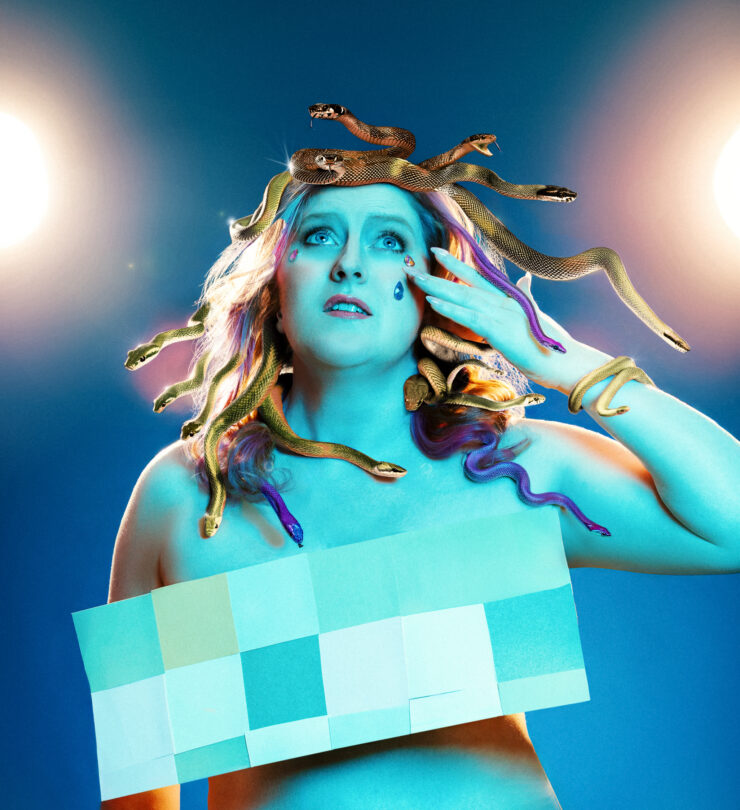
‘Comedy is the museum of red flags’, Gwen Coburn declares two-thirds of the way through her show, Sad Girl Songs. It’s a sharp observation – of the some three thousand shows that flood the fringe each year, a hefty chunk of them mine the worst or hardest parts of our lives in search of comedy gold.
This one-woman, feminist, dark comedy about abusive relationships is told through an extended peripheral reference to an ancient Greek myth. Specifically, Coburn casts herself as Medusa within her story of assault; snakes, patriarchy and PTSD are entwined in a twisty production which initially struggles to find its footing but eventually finds some ground in the final quarter.
Modern-day retellings of ancient Hellenic classics are a staple favourite of the Fringe, most of which endeavour to make their mark by retelling ‘with a difference’. Coburn’s spin turns the myth of Medusa on its head; in her version, Medusa herself is victim, not monster, positing a revisionist perspective on Ovid’s writings – for example through pointed observations that schoolchildren are taught that Medusa was ‘ravaged’, not ‘raped’ by Poseidon. Why do we tell and retell these patriarchal narratives?, Coburn’s show asks. Can’t we see how stories that punish, blame, or dismiss women are deeply embedded in our history, stretching from the earliest records to the whole of human experience?
Seemingly not. We wonder whether Coburn’s hatred of men is comically feigned or exaggerated – but as the weight of her performance deepens sharply in the second half, we realise her storytelling comes from a deeply traumatic wound. As she flings herself to the floor, retelling her experiences of being examined in the psychiatrist’s office, the show pivots into sobering intensity. She lets out a scream as her hands are bloodied by a broken wine glass – the horror of what happened to her that night strikes with sudden clarity.
Coburn’s metaphors simultaneously offer a reading on the deflective tendencies of those dealing with trauma themselves, emphasising the tendencies to laugh the pain away, or to use veiled metaphors to avoid being vulnerable. Coburn’s performance of mental illness is self-deprecating and deflective, which whilst may be interpreted as realistic in its subtlety, is difficult to appreciate until the very end, once her emotional journey is contextualised.
In the first half, unfortunately, a few comedy moments fall flat, with American references not quite picked up on by a British audience. Rather than centering its comedic material around anecdotal encounters with men, the production could have gained resonance and depth by forefronting the female experience in all its nuanced, both playful and profound, dimensions. Ultimately, the many threads of Coburn’s narrative meander, and don’t quite pull together until right at the end, which can make for a confusing and slightly incohesive piece. Whilst Coburn has a tuneful voice, her show tunes are random and run slightly off-kilter – songs such as ‘You Should Know Where The Clit Is’ and Daddy Issues Boyfriend’ are wittily penned but don’t necessarily blend into the narrative.
Still, there’s immense bravery in this show, bespeaking a resolute refusal to be silent about one’s experiences. It’s key that Coburn’s abuser is not represented by any more than a voice over the speaker – this show is about her, not him. Here, comedy is most effective as an educational tool: to share her experiences and call out the systems that allow this kind of abuse to continue or fly under the radar. Coburn takes her very real lived experiences to rally for personal and professional reparative justice – in all its expansive and complex forms.
Whilst it would have been better to lay off the comedic effort and lean into its more sincere messages, the show’s neat ending was touching, as ‘Medusa’ turns to the audience for one last time. ‘Thank you for looking at me’, she says, epitomising comedy’s capacity to bring audiences face-to-face with difficult and uncomfortable stories – without freezing up or turning to stone.
Recommended Drink: Snakebite.
Catch Sad Girl Songs at Greenside @ George Street between August 4th – 23rd at 15.10 (55mins). Tickets are available through the EdFringe Online Box Office.
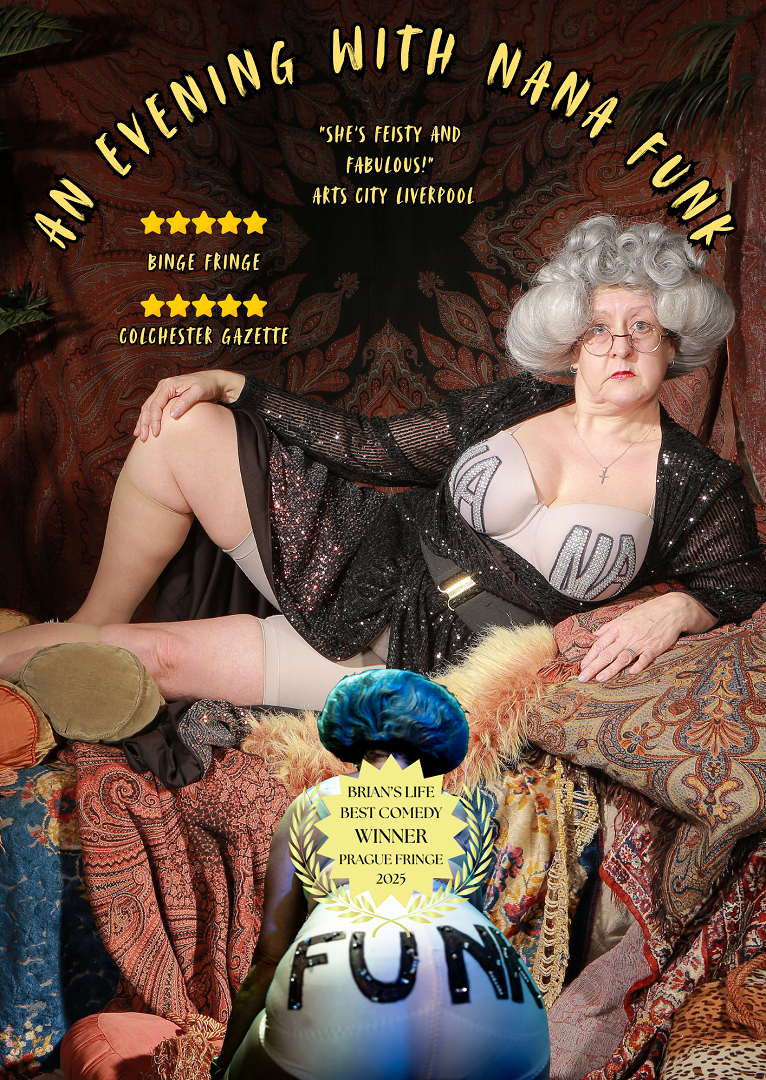
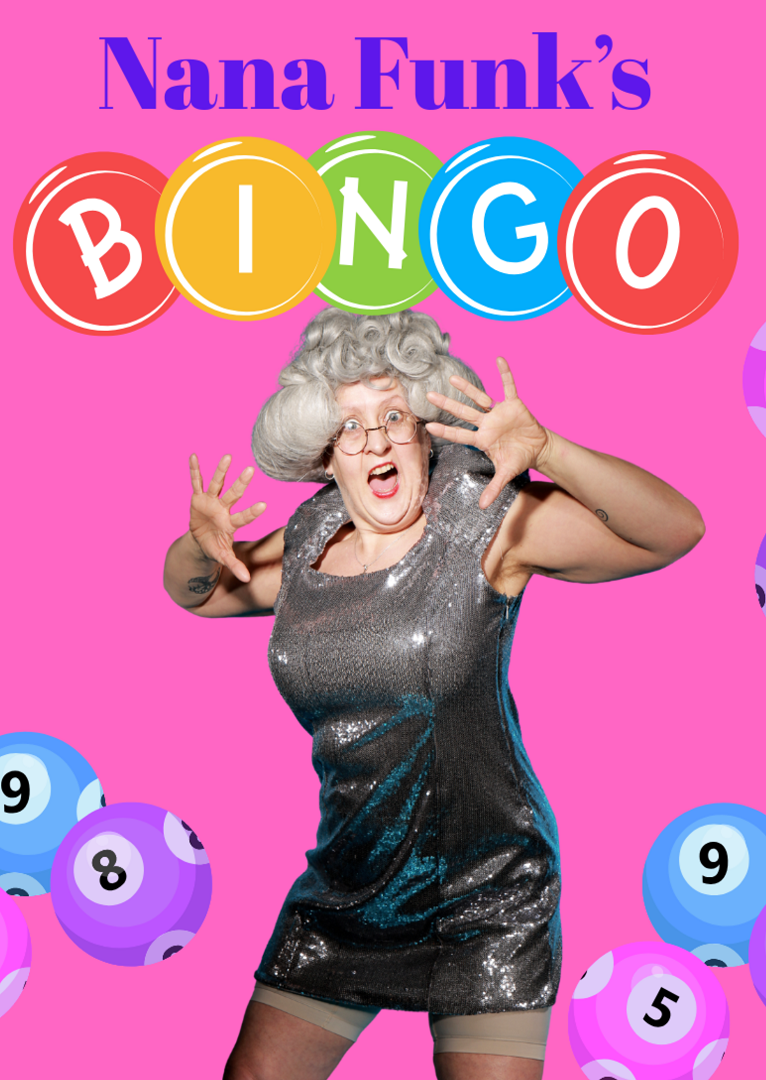
 Nana Funk
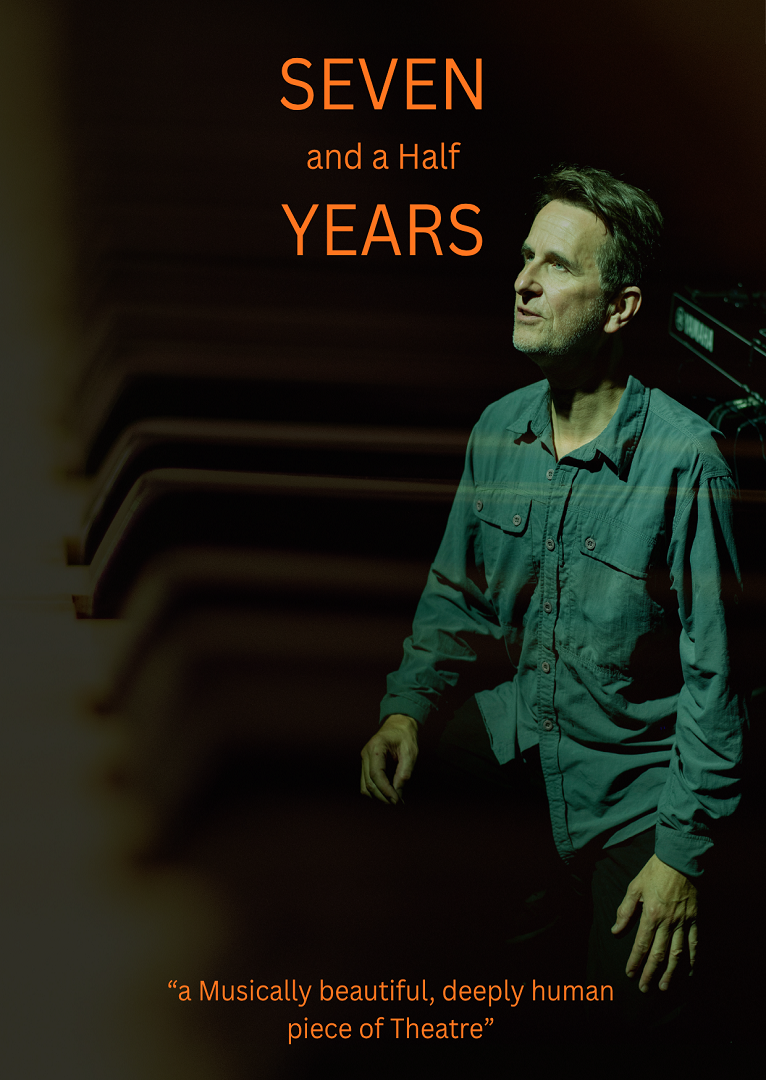
 Ben Powell
 Julia VanderVeen