 Sarah Kher-Bek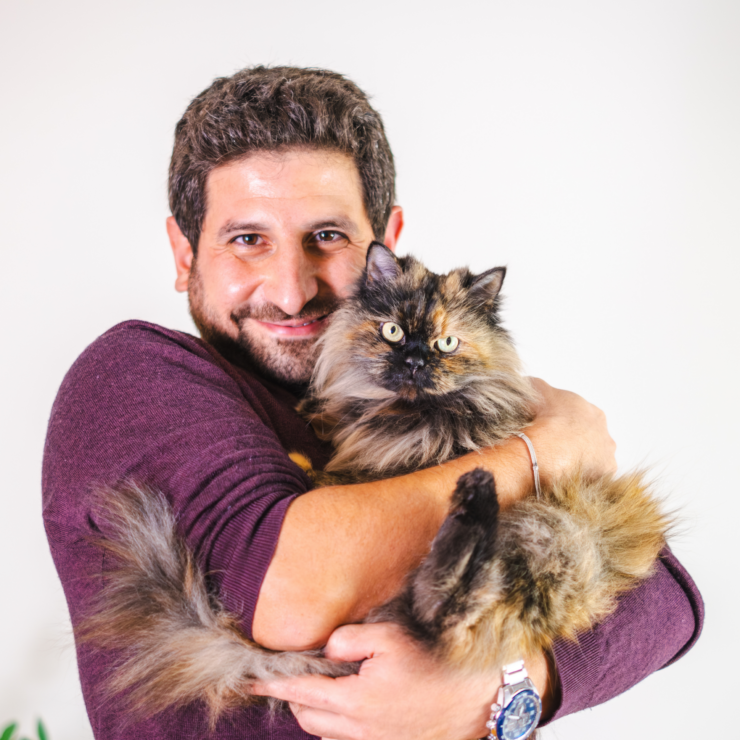
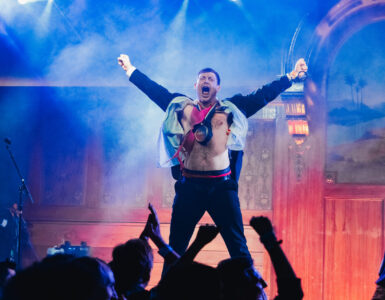
There are journeys we take, and journeys we’re forced to make. After all, “the difference between a migrant and a refugee is choice”. When Bahaa Dabbagh fled Syria, that choice was never his. But, in A Lucky Refugee?, armed with a microphone, suddenly he’s the one deciding where everybody goes. We, on the other hand, are entirely at his mercy.
There is something disarming about Dabbagh’s presence. His demeanour is gentle, his storytelling lithe, moving between the deeply traumatic and the spectacularly absurd. Yet beneath that softness lies something fiercely uncompromising. I have never seen fierceness performed so softly.
He draws us into memories that leave the room suspended in silence, hanging on his every word. Not because we’re uncomfortable, but because we trust him enough to follow wherever he takes us. And just when we’ve surrendered ourselves entirely to the emotion of his story, Dabbagh delivers a punchline that brings the entire room roaring to life.
“If you’re even wondering if you can laugh at this, to be fair, that question is racist.”
Dabbagh creates an impossible familiarity with astonishing speed. His jokes linger long after the punchline, resurfacing when we least expect them. An imaginary girlfriend, a rather questionable Valentine’s Day compliment, and a cat with suspiciously selective affection become part of a shared language between performer and audience. With each callback, he offers less explanation, trusting us to remember. And we do. By the end, we’re remembering his memories as though they were somehow our own inside jokes.
Dabbagh is a puppeteer of extraordinary precision, with us so completely wrapped around his fingers. One gentle tug at an old joke, and the entire room comes undone. He has mastered the art of exposing injustice through its own absurdity. Deny refugees the right to work, and they’ll work anyway. Only now, exploitation is part of the job description. Dabbagh recounts having his wages decided at the end of the month, because apparently employing a refugee was such a risk. And whenever government officials came knocking, the workers were hurried out of sight. Naturally, they soon discovered exactly who to call when they didn’t feel like going to work, dubbing it “refugees’ day off.”
Even Dabbagh isn’t spared his own scrutiny. When his therapist questions whether his insistence on being lucky might be a way of shielding himself from his trauma, the word begins to unravel. And with it, the comfortable little vocabulary we’ve built around displacement: resilient, grateful, fortunate. Such lovely words for things nobody should have to endure. We’ve become remarkably good at celebrating the strength of those we’ve never bothered to protect. It’s easier, perhaps, to call someone resilient than to ask why they had to be.
And then there’s Sasha, our star. Amid the indignities of trying to obtain a passport, Dabbagh finds solace in a shelter cat who, he insists, leaps with joy whenever she sees him. When his passport finally arrives, he decides, “If I get to leave, so do you.” But the moment she’s adopted, her affection mysteriously evaporates. “It was a total visa scam!”
Even the cat, it seems, has mastered the art of securing passage across borders.
Sasha becomes his sassy travelling companion, accompanying him through checkpoints and danger, her apparent resilience almost suspicious. But this supposedly innocent little refugee has a mischievous streak that borders on criminal. Just ask the housemate’s dog.
Perhaps Dabbagh’s greatest feat comes in a story that begins beneath the falling bombs of Syria and finds its unlikely conclusion on an Australian street. What unfolds is a masterclass in misdirection. He draws us into a memory steeped in trauma, only to pull the rug from beneath us with a gloriously absurd revelation nobody saw coming. He doesn’t diminish the weight of trauma to make room for laughter; somehow, he makes room for both.
Dabbagh is careful to remind us that his story is his alone, not a template for every refugee experience. Although, apparently, every refugee in the world attended a meeting and unanimously agreed on one thing: “Our greatest motivation is white people calling us resilient.”
But Dabbagh doesn’t ask us to admire his resilience. He invites us into his world, makes us fall in love with his cat, and leaves us feeling like we’ve known him for years. His story belongs to him. And armed with a microphone, some PTSD and Sasha’s passport photo, this magnificent storyteller has us dancing on his strings. What an honour it was to be one of his puppets.
Recommended drink: For a personal taste of Syria, it can’t be anything other than Arak mixed with some ice and water. Take a big gulp, and enjoy the journey.
You can catch A Lucky Refugee? at the Wheat Wine & Whiskey bar until the 11th of October at 20:30 (60 Minutes). Tickets are available to book through the Melbourne Fringe website.
 Lamesha Ruddock